


Watch Your Step!: The Importance of Ladder Safety at Work
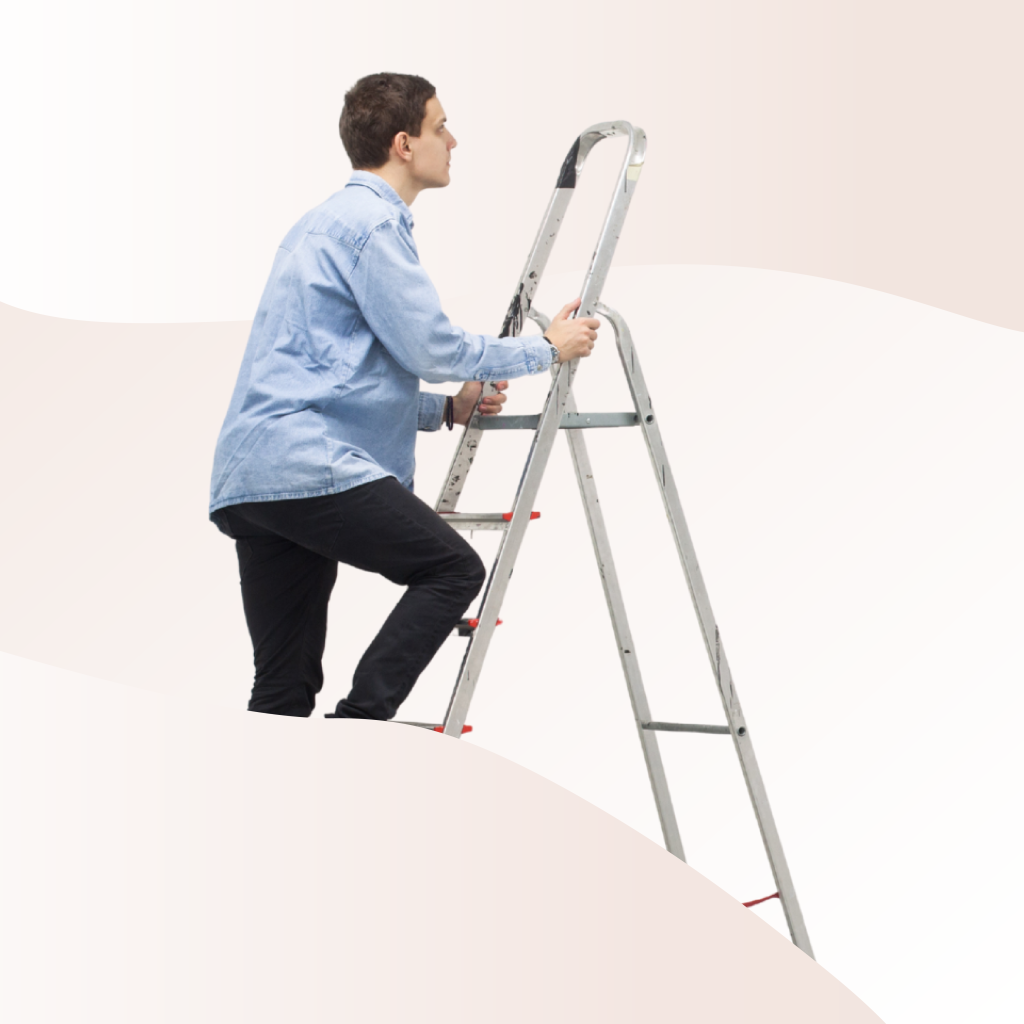
You’ve likely used a ladder or step stool multiple times in your life and know the basics of ladder safety, leading to confidence in using them. However, over time, bad habits may develop when ladders are used incorrectly without incident. Accidents do happen regularly and they can be avoided.
Watch your step and keep workers safe on the job with ladder safety knowledge!
Know your ladders
Did you know that for every job, there’s a different type of ladder? Here are a few different ladder types:
- Mobile ladder stands and mobile ladder platforms (“Roling staircases”)
- Step, platform and trestle ladders
- Sliding, fixed, extension and single ladders
- Step stools
Depending on what work needs to be done, different ladder types may be required. While you’re planning work, think about what kind of ladder may be necessary for workers in order to keep them safe at heights and if more than one person needs to be assigned to a job to help support the climber on the ladder.
Always do a visual inspection
Before climbing, it’s important to always do a ladder inspection and ensure workers are trained on what to look for, including any broken or missing parts and improper vs proper ladder storage.
A ladder inspection checklist can help determine if the ladder is safe to use or not.
Musculoskeletal disorders (MSDs) and ladder safety
Did you know that improper ladder use can also lead to MSDs? Improper use can contribute to a strain or awkward posture, increasing the risk of MSD to workers.
Handling objects on ladders must also be considered: Is this object too heavy or large for the worker? Can the worker still maintain three points of contact while carrying the object? Will the worker be lifting and or lowering the object or passing on the object to another worker while on the ladder? These are all questions that should be asked in order to determine what type of ladder is necessary, safety precautions that should be flagged, or if there needs to be another solution for transporting the object between point A and point B.
Ladder safety training
Workplaces should also take the time to train workers so they know which type of ladder to use for each task they may be required to do and how to set up each ladder, how to work safely on a ladder and complete an inspection each time a ladder is used.
Our ladder safety eLearning program provides a practical introduction to working safely with a variety of ladders used in the workplace and provides a thorough understanding of ladder use and practice to keep workers safe.
A few more example steps for safety
- Set up ladders on solid, dry and even surfaces
- Use a helper to support the ladder from the bottom
- Always face the ladder while climbing
- Use the 3 Point Contact (two hands and one foot or one hand and two feet in contact with the ladder at all times)
- Don’t stand on the top two steps of a step ladder or on the bucket shelf
- Learn more good habits for proper ladder use in our fast fact

